Use cases
The product is its own case study.
UltiPad is built inside UltiPad. These stories come from that build record — pick a category, or filter by the tags that match your team.
AI-era development
Run coding agents against real product context — and measure what they ship.
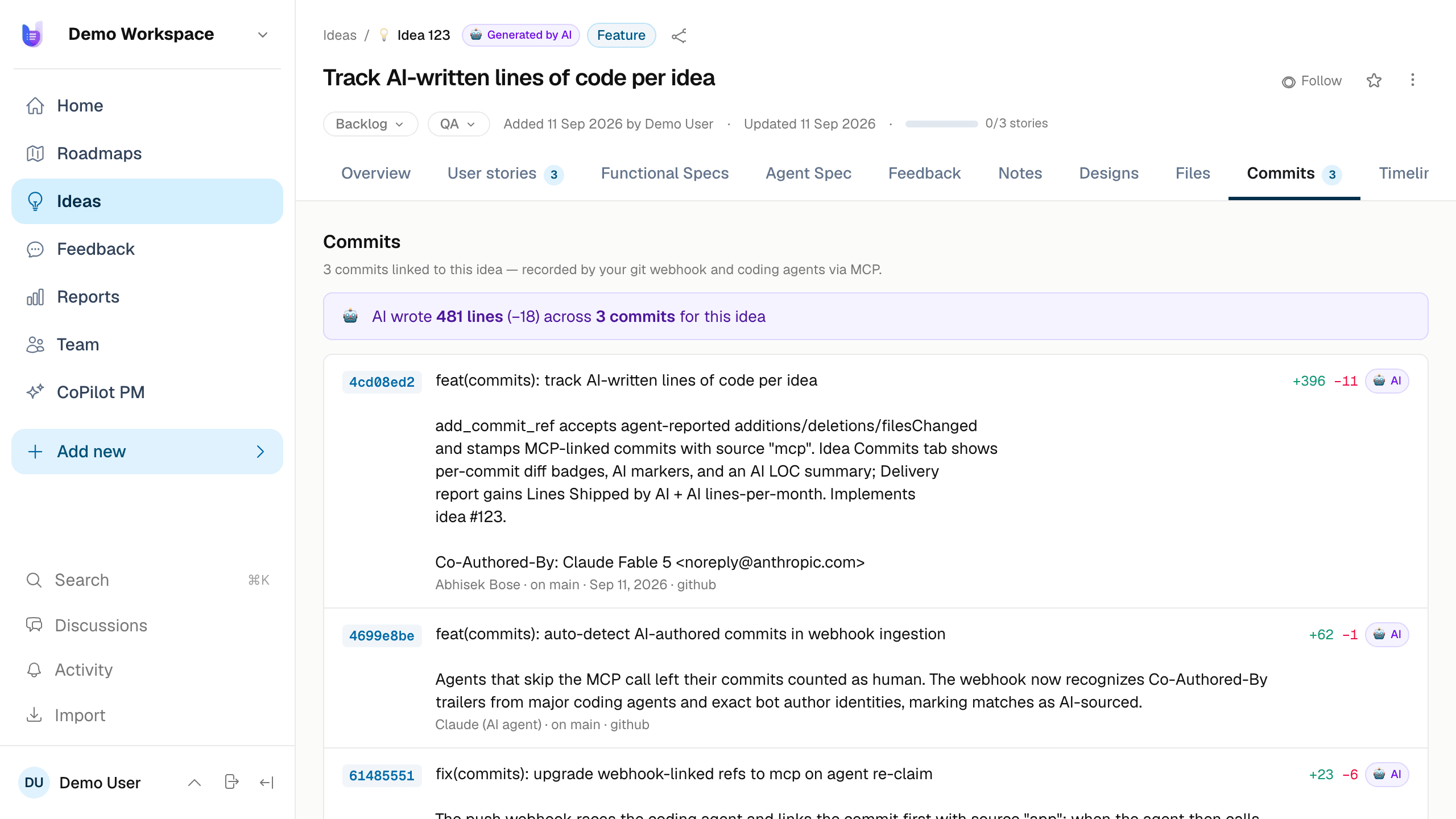
How UltiPad built itself: 30+ features shipped by a coding agent
UltiPad is developed inside UltiPad. Ideas become specs, a coding agent builds them over MCP, and every commit reports back — 3,028 AI-written lines, counted commit by commit.
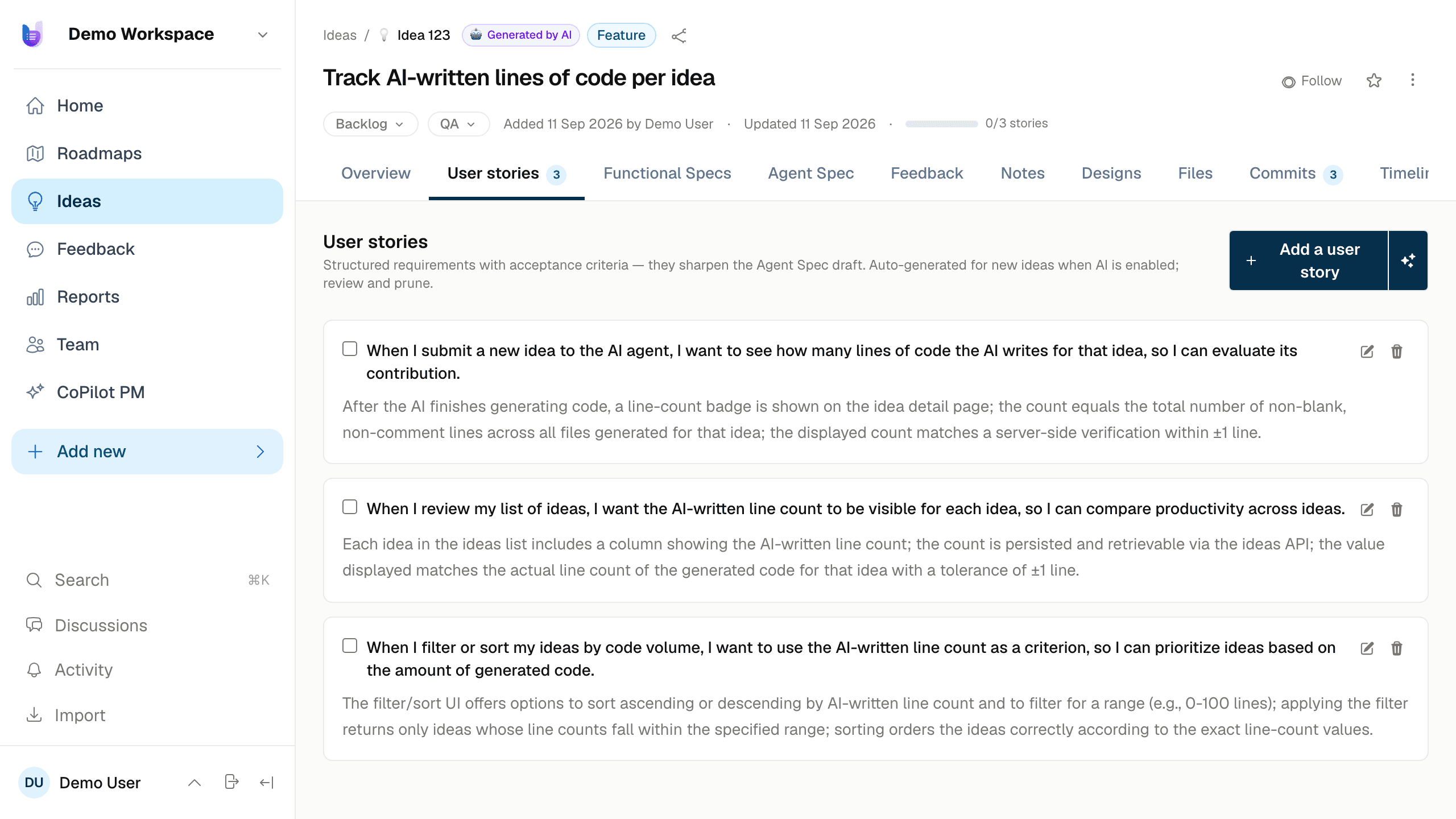
Anatomy of one idea: the ADLC from first sentence to counted delivery
Idea #123 in our workspace, replayed station by station: auto-drafted stories, an approved agent spec, three agent commits totalling 481 lines, and a stage that moved itself to QA.
Product management
Close the loop from customer signal to shipped feature, with the evidence attached.
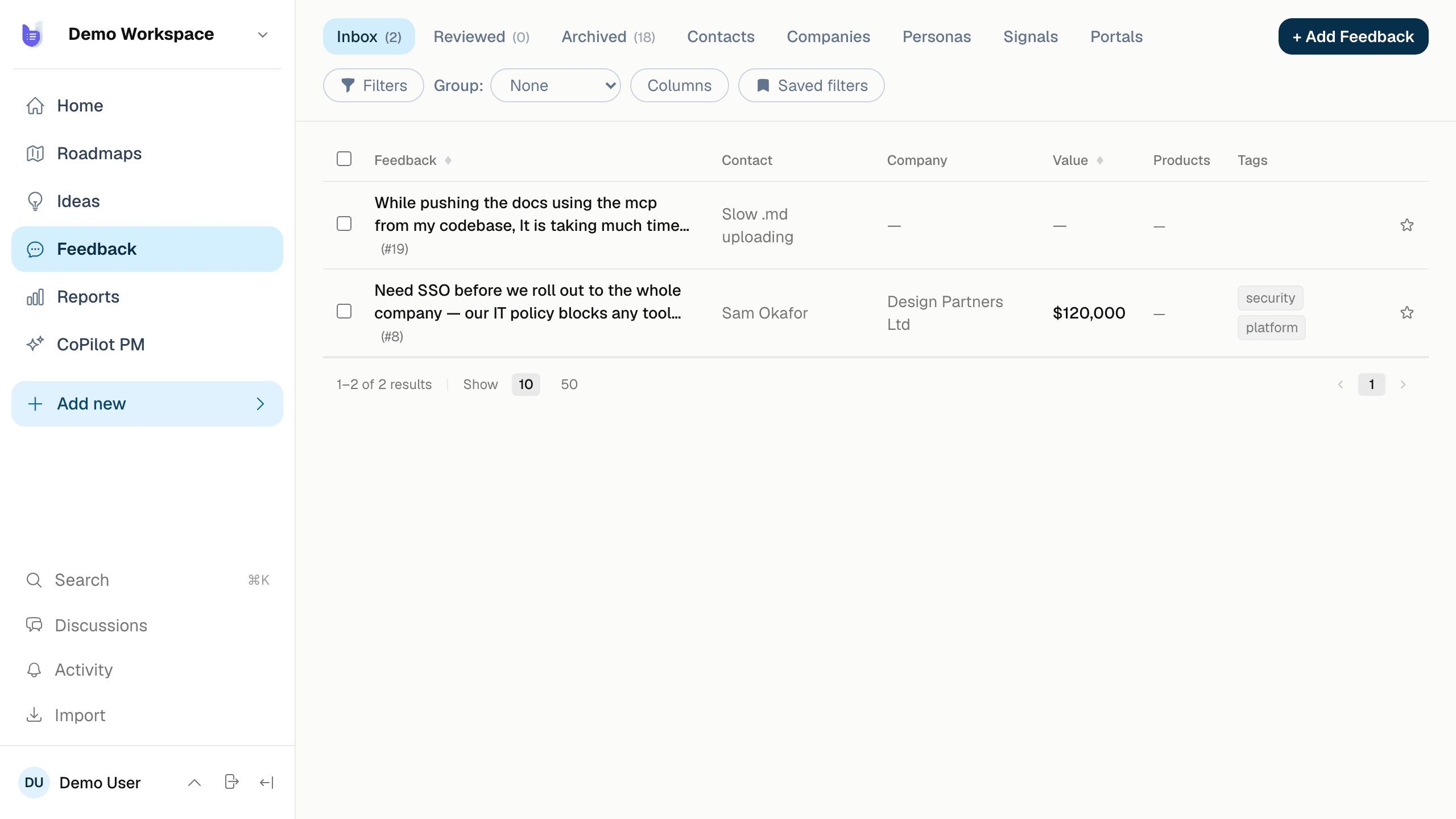
A user reported a missing API at breakfast. It was in production by lunch.
An external user hit a documented endpoint that didn't exist. The report became an idea, the idea became a spec, an agent built it — deployed, rate-limited, and verified the same day.
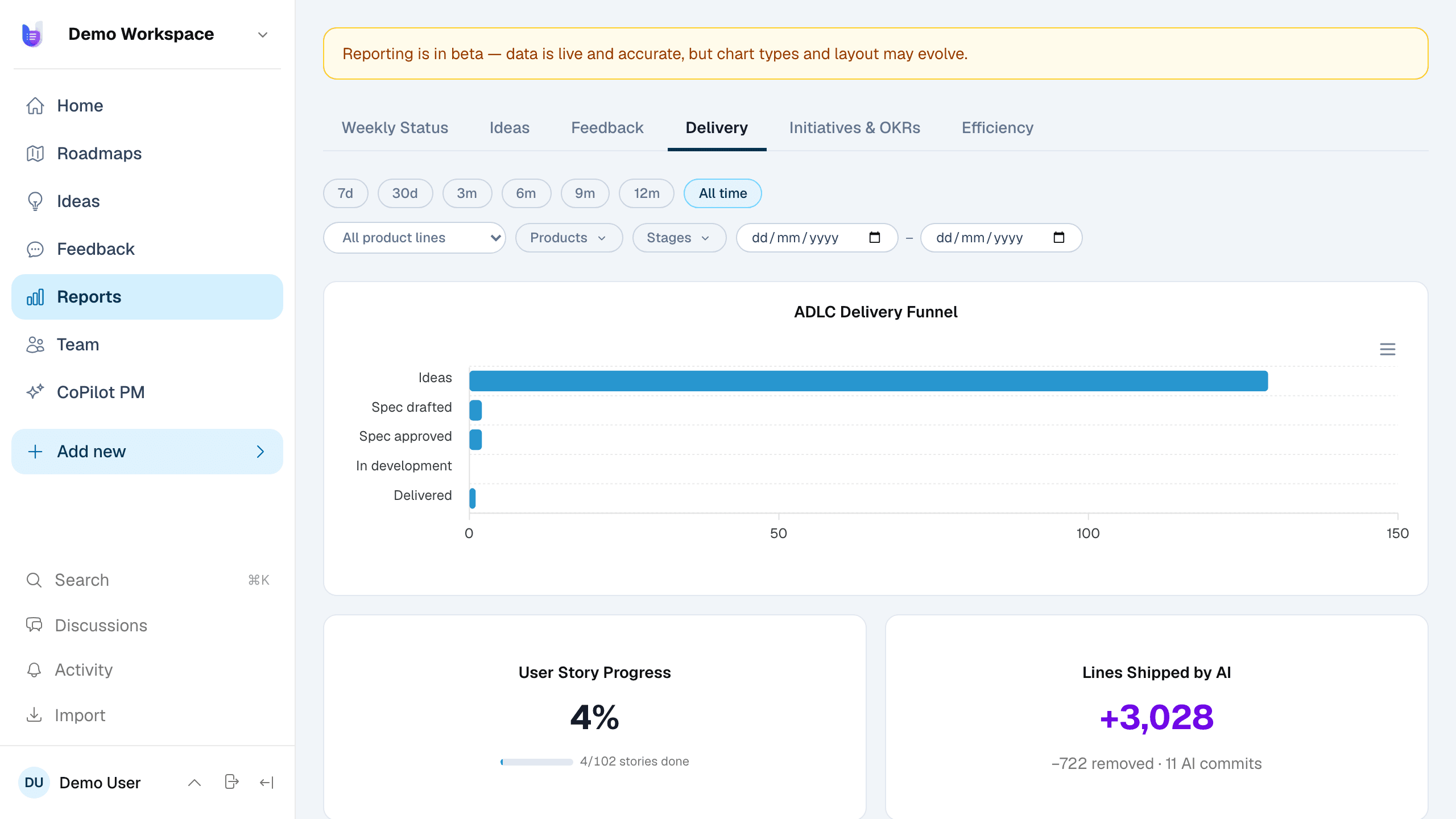
Six reports, zero spreadsheet exports: how we run the week on live data
Weekly status, delivery funnel, AI-vs-human contribution, cycle-time efficiency, and OKR progress — filtered by product, line, stage, or date range, with CSV export when you need the raw rows.
Team & delivery
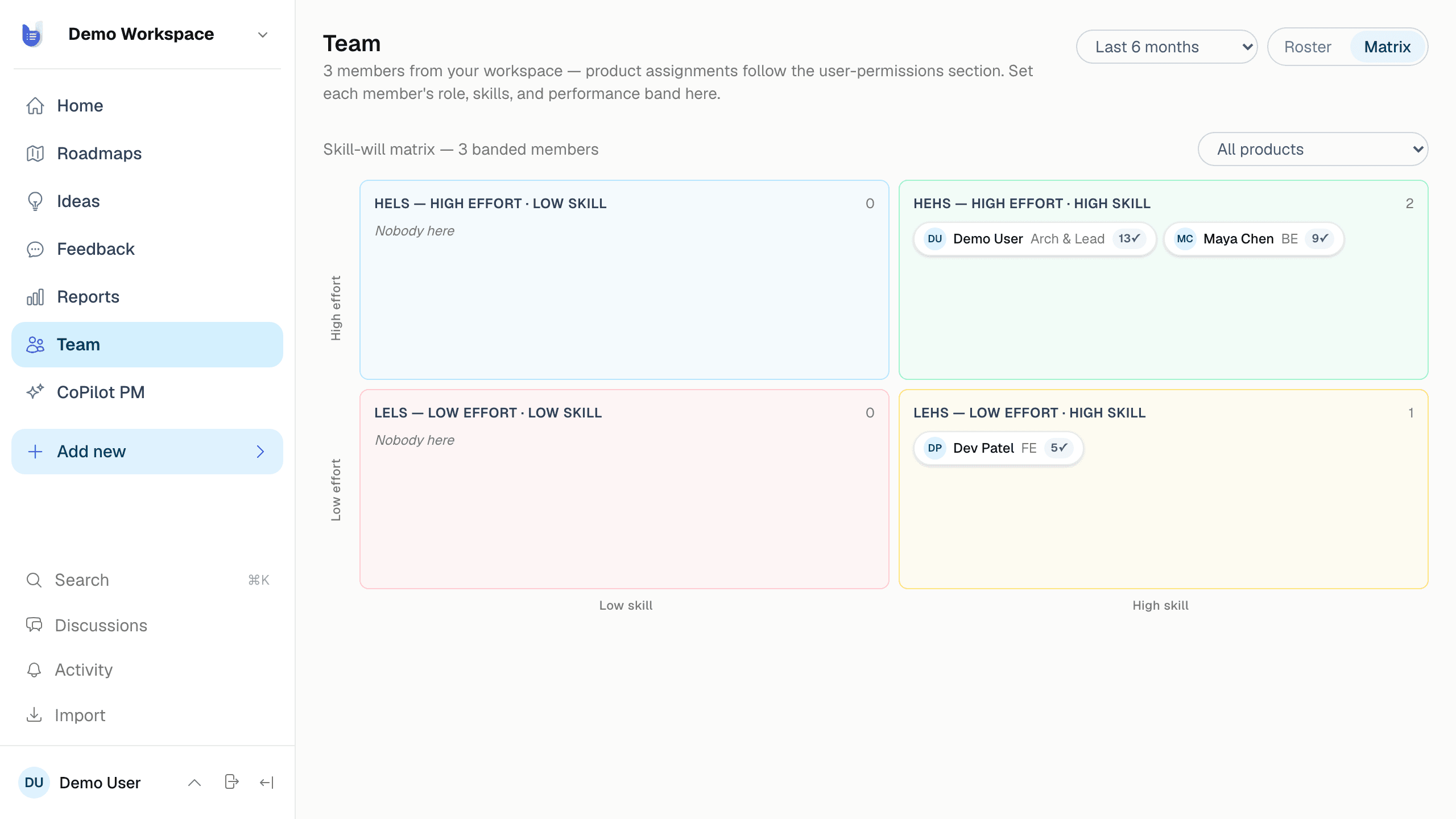
See who delivers what — skill-will mapping backed by real delivery data.
Integrations & automation
Wire git hosts, support desks, and MCP clients into the loop — safely.
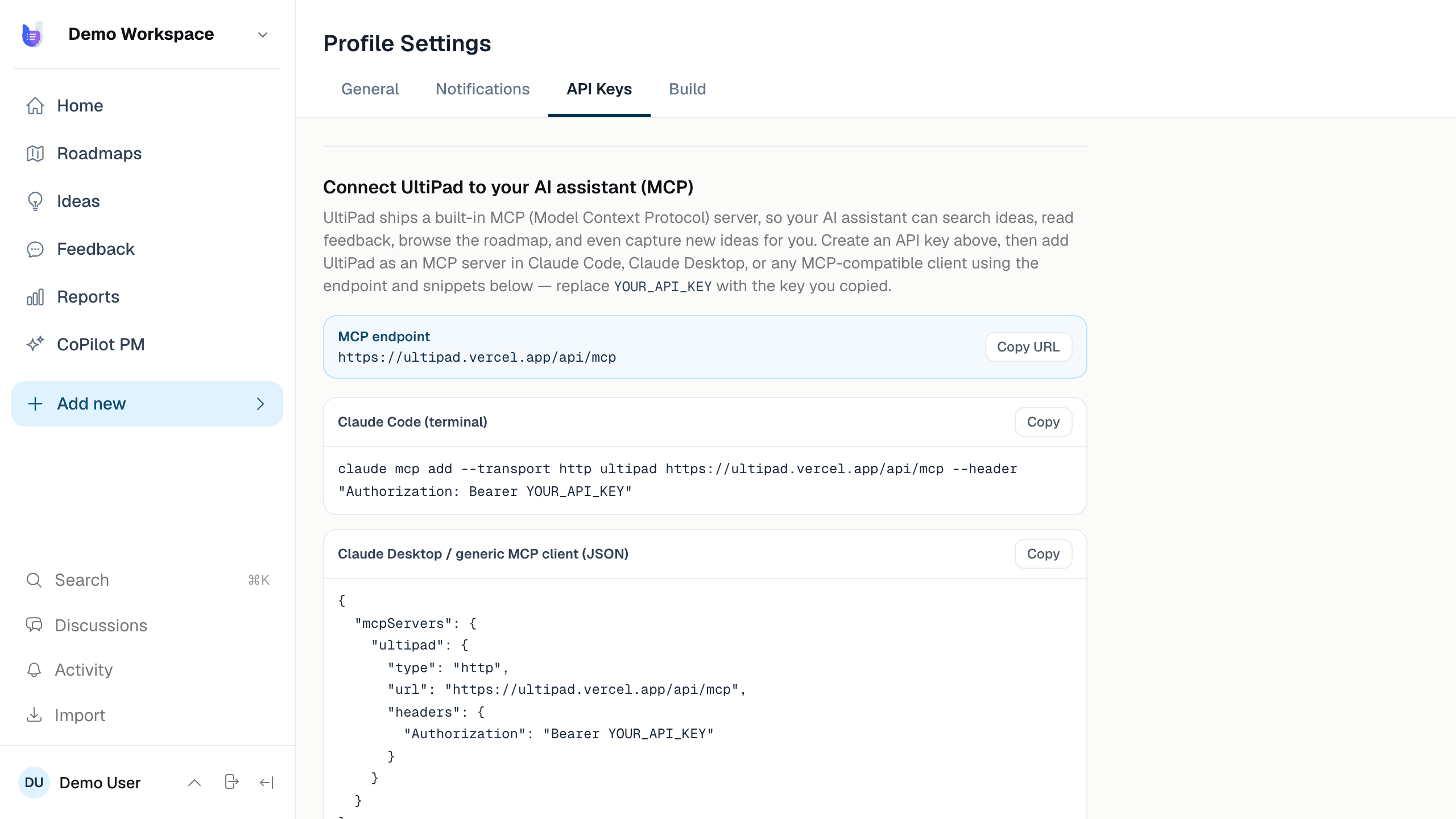
Connecting a coding agent safely: keys, roles, and scopes over MCP
One command connects Claude Code or Cursor to 35 product tools — governed by per-user API keys, a read-only reviewer role, and product scoping enforced on every call.
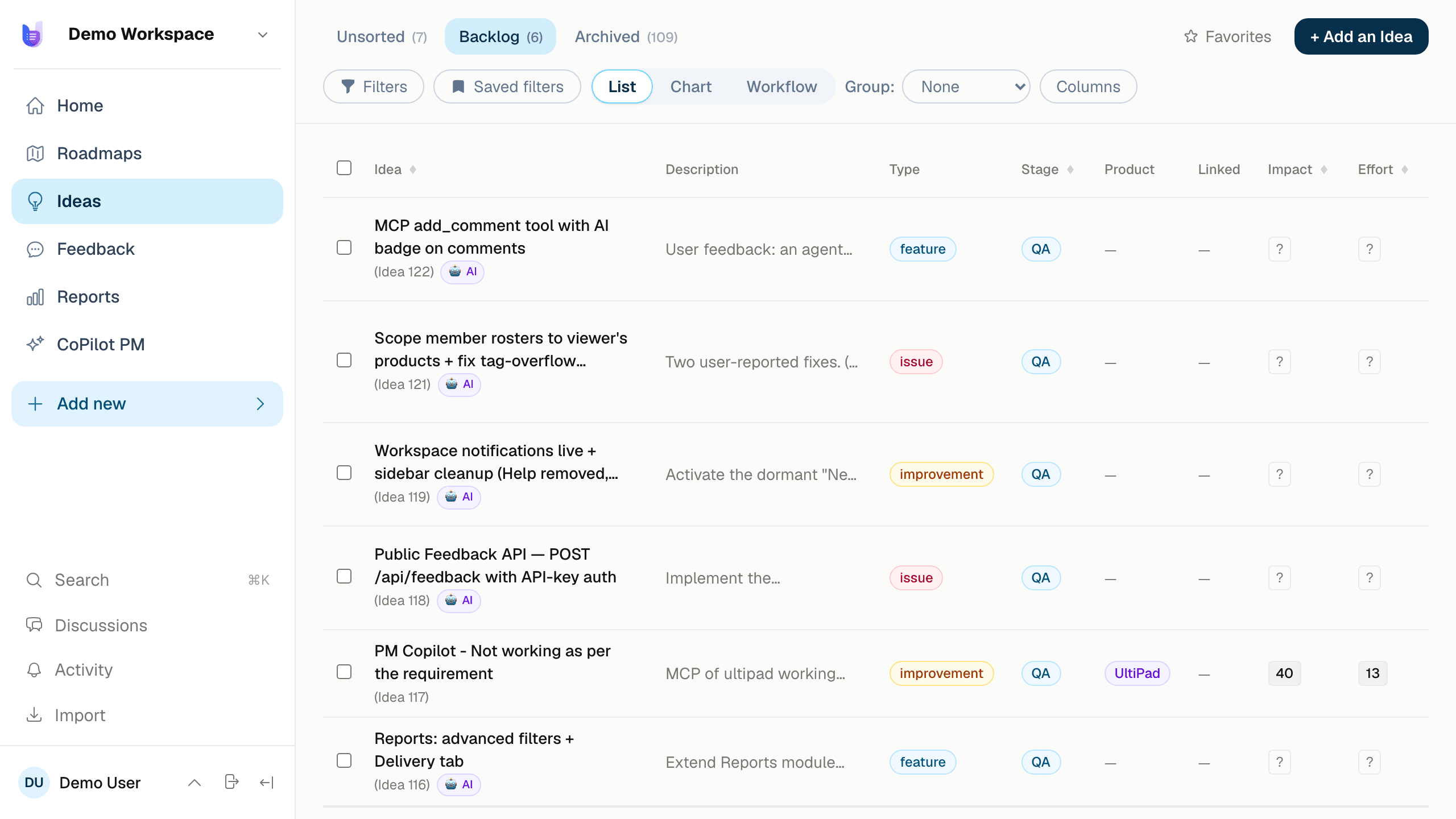
The loop without the agent: webhooks and a REST API do the boring wiring
Commits auto-link to ideas from your git host's webhook — including AI-authorship detection from commit trailers — and a rate-limited REST endpoint turns any support desk into a feedback source.
By domain
The ADLC isn't only for code — point the same loop at any team that ships work.
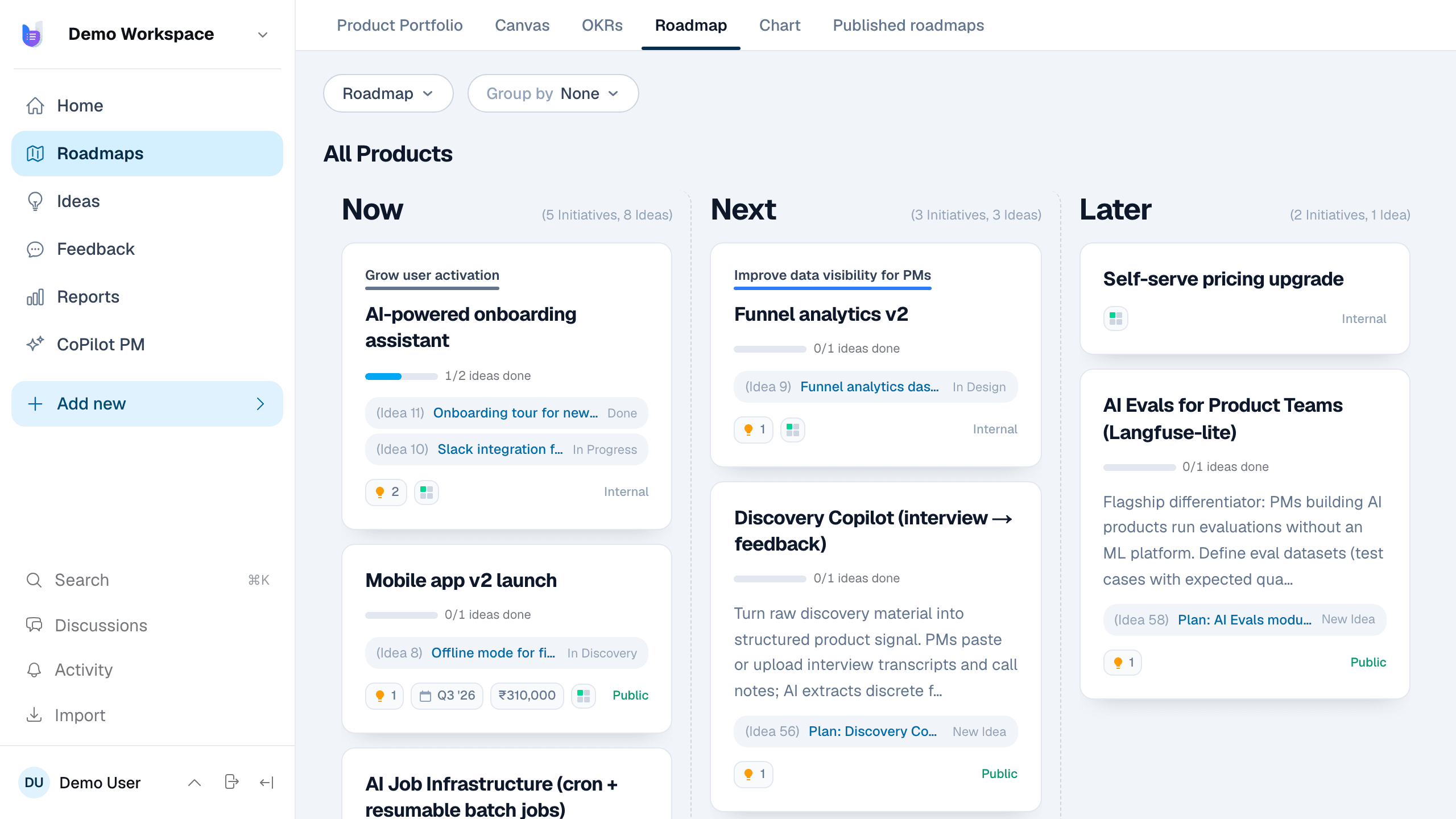
Agencies: replace the status deck with a loop your clients can watch
Client requests arrive through branded portals, carry the account's revenue weight into prioritisation, and resolve on a published roadmap — no Friday status deck required.
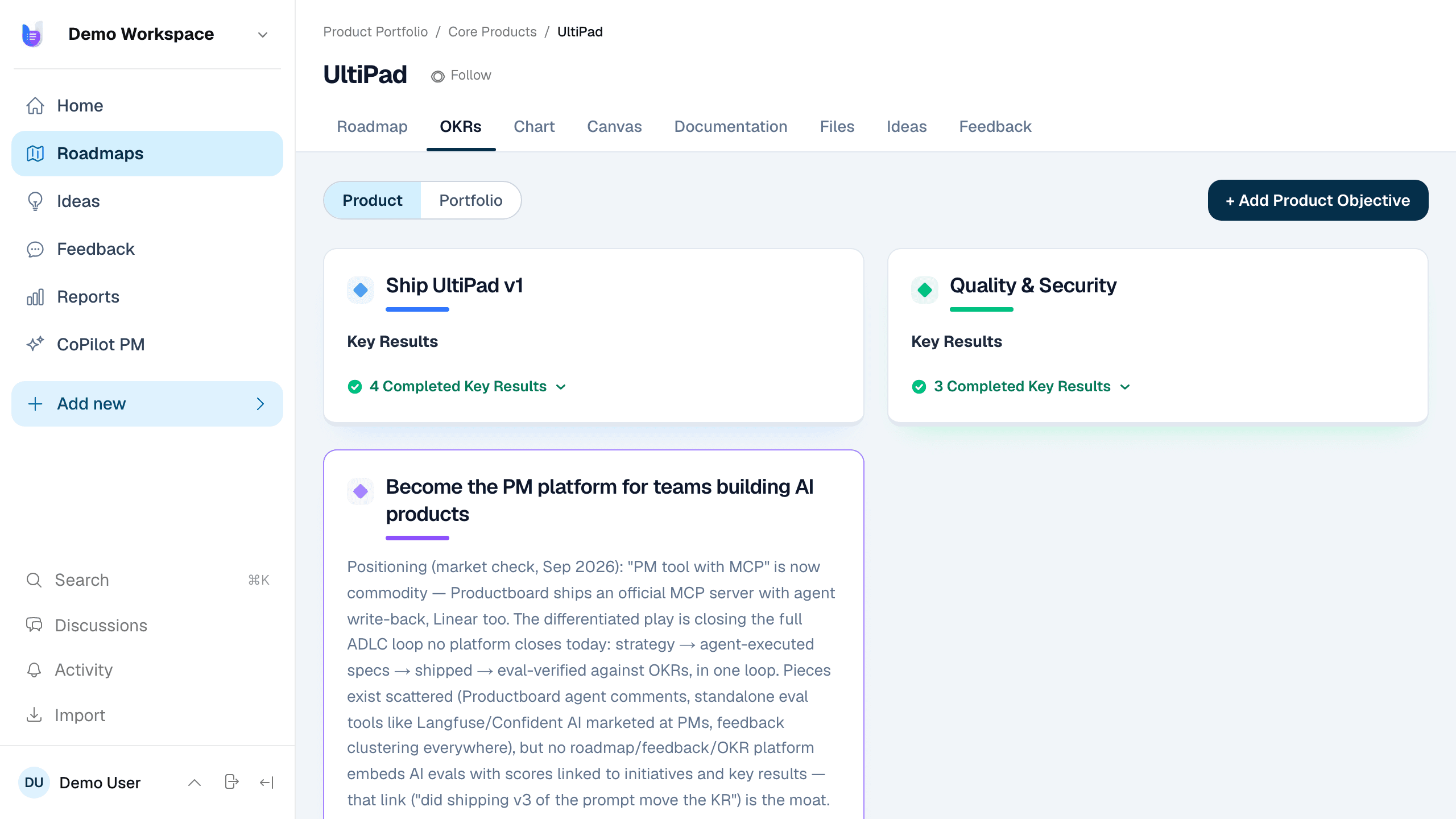
Marketing teams: campaign briefs that write themselves and report back
Treat every campaign as an idea in the loop: auto-drafted briefs with acceptance criteria, OKR-linked execution, and a Learn station that actually gets filled in.
Operations & internal teams: an intake queue that proves its own SLA
IT, HR, and ops requests get the triage inbox, due-date tracking, and per-owner delivery evidence — cycle times and on-time rates computed from the workflow itself.