By domain
Operations & internal teams: an intake queue that proves its own SLA
IT, HR, and ops requests get the triage inbox, due-date tracking, and per-owner delivery evidence — cycle times and on-time rates computed from the workflow itself.
1 inbox
for every internal request
SLA
on-time rate computed, not claimed
4
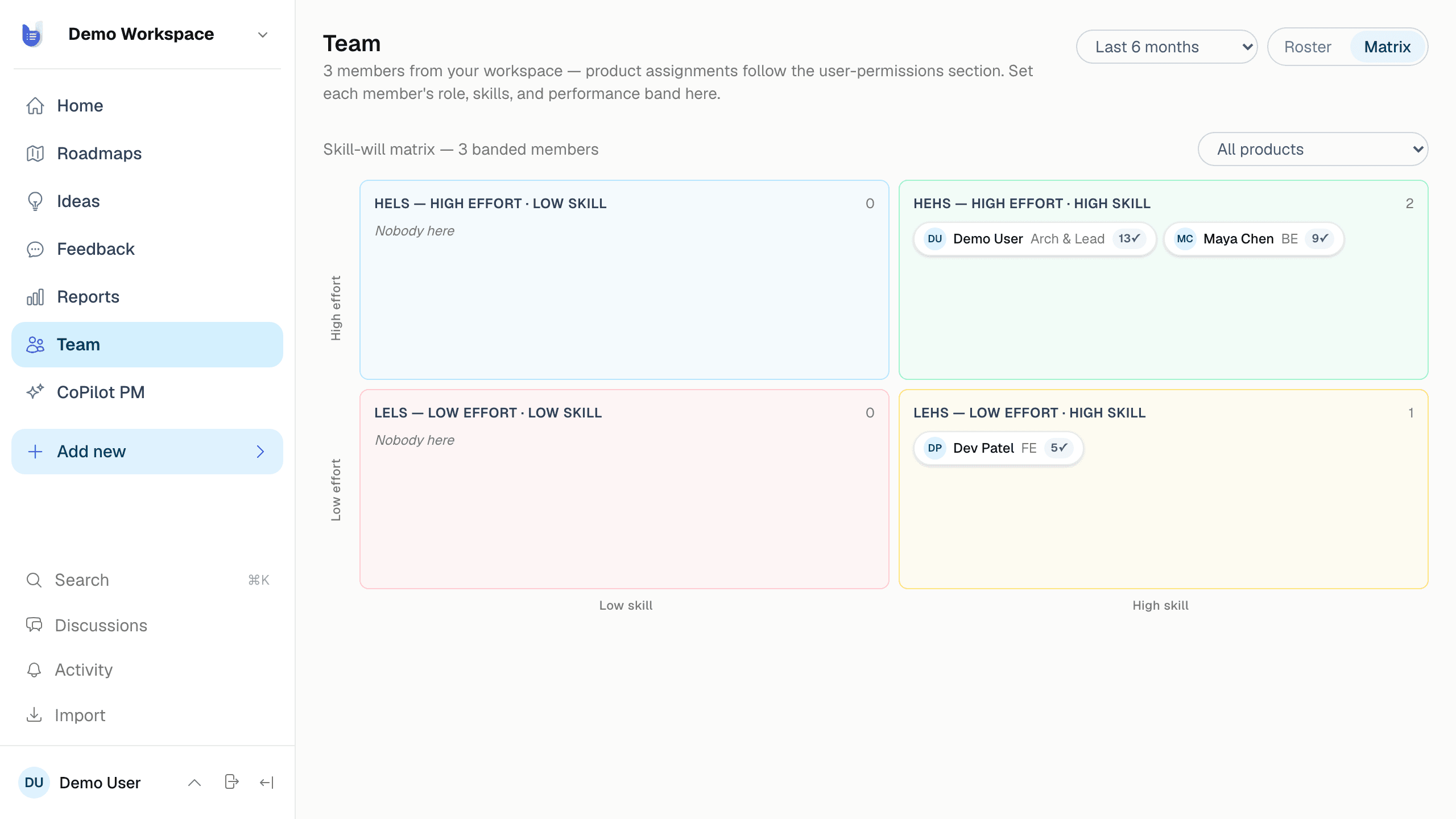
quadrants of who-delivers-what
Internal service teams live the ADLC without the vocabulary: requests arrive (feedback), get accepted and scoped (ideas), move through stages (build), and close (ship). What they usually lack is the evidence layer — which requests are stuck, who actually closes things, whether the SLA is real.
Run the intake through UltiPad and the evidence is automatic. Requests carry their requester; accepted work carries owners and due dates; every stage move is recorded. The Efficiency report shows average days per stage, so the bottleneck names itself. The Delivery scorecards show, per person, what closed, how fast, and how often on time — from the workflow's own records, with nobody filling in a timesheet.
The same rules protect sensitive work
Product scoping doubles as department scoping: an HR workspace member sees HR requests, not IT's. Performance bands on the team page stay admin-only, stripped server-side. And repetitive request types are exactly where a connected agent earns its keep — drafting the standard response, filing the follow-up task, updating the requester — with every action attributed to the agent's own key.
Run this loop on your own product.
We're onboarding teams in waves — join the waitlist and we'll open your workspace.
Join the waitlistRead next
Agencies: replace the status deck with a loop your clients can watch
Client requests arrive through branded portals, carry the account's revenue weight into prioritisation, and resolve on a published roadmap — no Friday status deck required.
Marketing teams: campaign briefs that write themselves and report back
Treat every campaign as an idea in the loop: auto-drafted briefs with acceptance criteria, OKR-linked execution, and a Learn station that actually gets filled in.