By domain
Agencies: replace the status deck with a loop your clients can watch
Client requests arrive through branded portals, carry the account's revenue weight into prioritisation, and resolve on a published roadmap — no Friday status deck required.
1 link
replaces the weekly status deck
$
revenue context on every request
2-way
clients submit and vote
Agency work is the ADLC with a client attached: requests come in, someone decides what's worth doing, work ships, and the client asks where things stand. Most agencies run that loop across email, spreadsheets, and a deck rebuilt every Friday.
In UltiPad the intake is a branded portal per client — they submit requests and vote on what matters, and every item lands in one triage inbox carrying its contact, company, and contract value. Prioritisation stops being a shouting match: when two requests compete, the revenue context is on the record.
The status meeting becomes a URL
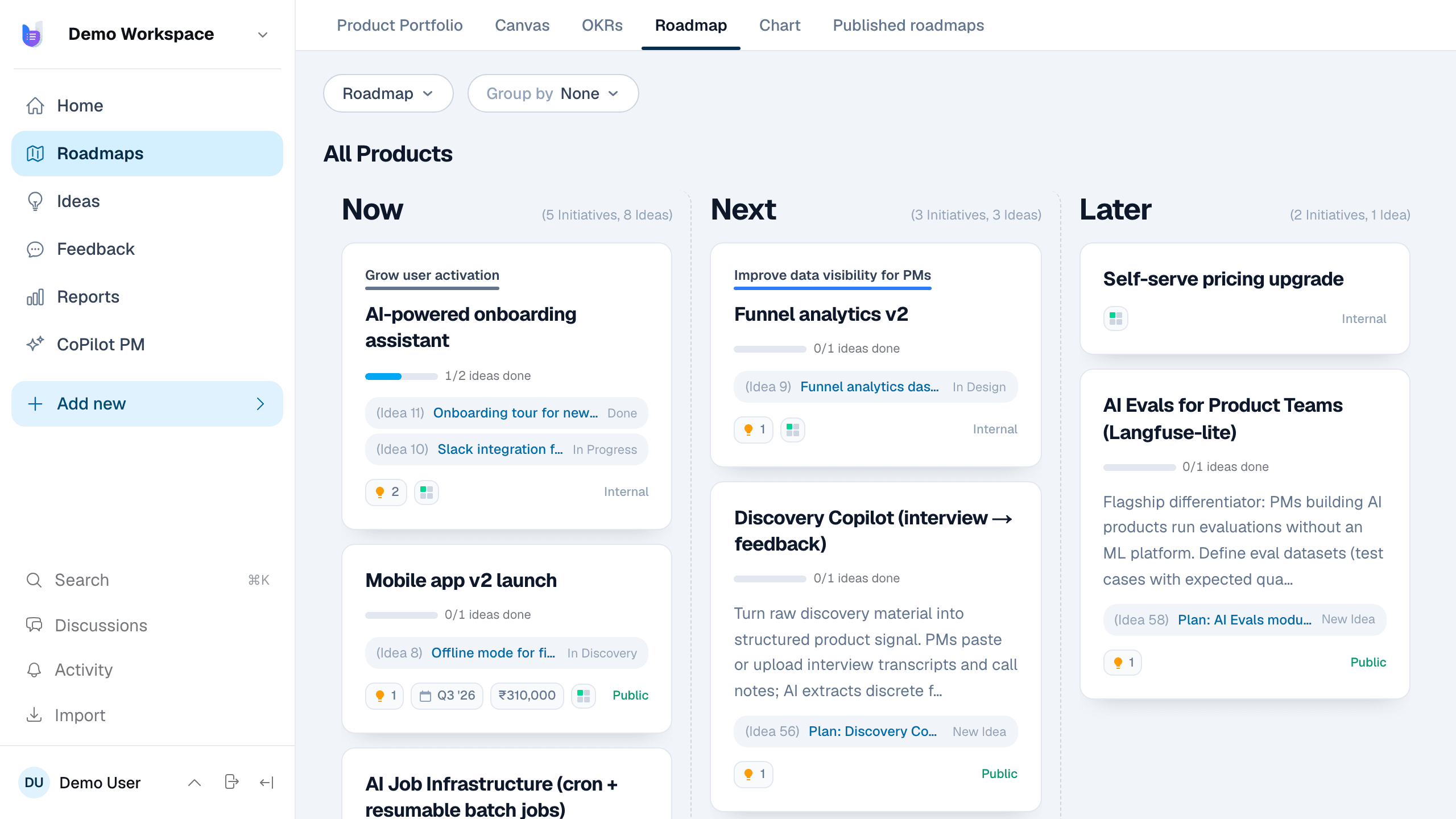
Accepted requests become scored ideas on a Now/Next/Later roadmap, and the roadmap publishes as a read-only link. Clients check progress themselves; delivered work shows on the same record their request created. Internally, the delivery scorecards show which account managers and producers actually ship on time — the same evidence layer our own team runs on.
And where the work itself is agent-assistable — copy drafts, build tasks, report generation — the same MCP connection that builds our software can execute against your specs. The loop doesn't care that the deliverable is a campaign site instead of a feature.
Run this loop on your own product.
We're onboarding teams in waves — join the waitlist and we'll open your workspace.
Join the waitlistRead next
Marketing teams: campaign briefs that write themselves and report back
Treat every campaign as an idea in the loop: auto-drafted briefs with acceptance criteria, OKR-linked execution, and a Learn station that actually gets filled in.
Operations & internal teams: an intake queue that proves its own SLA
IT, HR, and ops requests get the triage inbox, due-date tracking, and per-owner delivery evidence — cycle times and on-time rates computed from the workflow itself.